
Amy Comstock Rick, JD, director of the Rare Disease Innovation Hub, discusses how the hub could reshape evidence requirements, trial design, and drug development.
By Angie Drakulich | November 2, 2026
The US Food and Drug Administration’s Rare Disease Innovation Hub was established in 2024 to strengthen coordination across the agency’s drug and biologics centers and to address challenges in rare disease research and therapeutic development. Through its new Rare Disease Framework Initiative, leaders of the Hub are working to make regulatory expectations more consistent and predictable, while promoting flexible, science-based approaches to evaluating therapies when traditional clinical trials may not be feasible.
Here, the Hub’s Director of Strategic Coalitions, Amy Comstock Rick, JD, talks to the editor of BionewsHCP, Angie Drakulich, about the initiative’s goals, what it could mean for rare disease drug development, and what lies ahead.
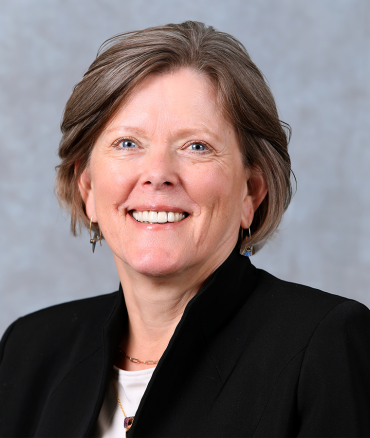 Amy Comstock Rick, JD
Director of Strategic Coalitions
FDA’s Rare Disease Innovation Hub
BionewsHCP: In your view, what are the most important developments shaping rare disease research and therapeutic development today, and which have the greatest potential to change clinical practice over the next 5 to 10 years?
Rick: The pace of scientific advancement in rare disease research has accelerated dramatically, and the FDA is working to ensure its regulatory approach keeps pace. Genomic characterization enables us to identify and understand disease biology at a level of precision that was unimaginable a decade ago. Platform trial designs and innovative Bayesian statistical approaches have expanded what is scientifically achievable in small-population settings. Real-world evidence methodologies are also maturing in ways that can supplement or inform clinical development when traditional trial designs are not feasible.
We are seeing the field move toward earlier patient engagement, that is, understanding disease burden, meaningful endpoints, and benefit-risk priorities from patients and families themselves. These advances hold the greatest potential to change clinical practice over the next five to ten years. But realizing that potential requires closing the distance between what science now makes possible and what our regulatory frameworks are consistently equipped to evaluate. Initiatives like the Rare Disease Framework are designed to do exactly that by aligning modern evidentiary tools with the realities of rare disease development so that scientific progress can be translated into approved therapies for the patients who need them most.
“Rare disease challenges do not respect the boundaries between FDA’s centers, and neither should our solutions,” – Amy Comstock Rick, JD
BionewsHCP: The FDA Rare Disease Innovation Hub was established to strengthen collaboration across the Center for Drug Evaluation and Research (CDER) and the Center for Biologics Evaluation and Research (CBER). What gaps in rare disease drug development is the Hub best positioned to address, and what progress do you hope this collaboration will deliver?
Rick: The Hub was created because rare disease challenges do not respect the boundaries between FDA’s centers, and neither should our solutions. The Hub now leads the Rare Disease Framework Initiative, partnering with the Office of the Commissioner, CBER, and CDER, with engagement from the Office of Orphan Products Development (OOPD), the Oncology Center of Excellence (OCE), the Center for Devices and Radiological Health (CDRH), and other relevant offices. This cross-center leadership structure is itself a signal of what the Hub is meant to be: a place where the agency works on rare disease as a whole, not in silos.
The gaps the Hub is best positioned to address are those of consistency, predictability, and customization. FDA has heard repeatedly that evidence standards are too uncertain, that inconsistency persists across the process, and that meaningful external engagement begins too late. The Hub aims to change that.
BionewsHCP: How is the field evolving in its approach to identifying treatment targets — from managing symptoms to modifying disease pathways, correcting underlying defects, or intervening before irreversible damage occurs? What challenges remain in translating promising targets into effective therapies?
Rick: The field has shifted from managing symptoms to correcting the underlying genetic, cellular, and molecular defects that drive disease. FDA’s February 2026 draft guidance on the “plausible mechanism framework” reflects the agency’s effort to build regulatory pathways that keep pace with this evolution by supporting approval of therapies that correct or modify the underlying cause of disease by identifying the disease-causing abnormality, demonstrating the therapy targets that root cause, and confirming successful target engagement.
Significant challenges remain. Natural history data are sparse for many rare diseases, clinically meaningful endpoints are elusive, and even the most flexible trial designs face limits when patient populations are extremely small. The framework initiative is FDA’s broader effort to address these challenges … in how the agency evaluates rare disease therapies through new evidentiary pathways, platform-based approaches, and earlier engagement with patients and sponsors.
BionewsHCP: Rare disease researchers often face challenges in trials due to small patient populations, poorly understood natural histories, and limited outcome measures. Which innovations in trial design, biomarkers, statistical methods, and real-world evidence hold the greatest promise for addressing these challenges?
Rick: There is promise in all four. Innovative trial designs such as platform trials and adaptive designs allow researchers to study multiple conditions simultaneously, modify trial parameters as new data emerges, and make more efficient use of every patient enrolled. Better biomarkers and fit-for-purpose outcome measures are critical to tracking whether a therapy is actually working, and FDA’s Rare Disease Endpoint Advancement pilot and plausible mechanism framework are directly advancing that work.
Bayesian statistical methods hold particular promise because they allow researchers to incorporate existing knowledge into a trial’s analysis, making it possible to draw meaningful conclusions from very small datasets without sacrificing scientific rigor. And real-world evidence drawn from patient registries, natural history studies, and health records is increasingly filling the gaps where prospective trials cannot be conducted. The framework initiative brings these innovations together under a single commitment: that the evidence FDA requires should be matched to what is actually achievable for each disease, its patients, and the therapy under review.
“The goal is to move from a system where regulatory flexibility exists in theory but is applied inconsistently, to one where it is the norm, clearly communicated, and supported by institutional knowledge and training.” – Amy Comstock Rick, JD
BionewsHCP: How will the Rare Disease Framework Initiative change regulatory decision-making for rare disease therapies, particularly when traditional clinical trials are not feasible?
Rick: The initiative represents a commitment to a fresh approach, one where fit-for-purpose evidentiary expectations are applied consistently and transparently, rather than variably. The Framework does not create a new approval pathway separate from accelerated approval or traditional approval. Instead, it reimagines how existing regulatory authorities are applied in a way that is calibrated to what evidence is reasonably attainable given the nature of each disease, its target population, product type, and the state of scientific understanding.
The goal is to move from a system where regulatory flexibility exists in theory but is applied inconsistently, to one where it is the norm, clearly communicated, and supported by institutional knowledge and training. When traditional clinical trials are not feasible, because there are simply not enough patients or because a control arm is ethically or practically impossible, the Framework will help reviewers and sponsors work together to identify alternatives grounded in sound science.
“The goal is a framework that is built with the rare disease community, not just for it, so that there are no surprises for sponsors, for clinicians, or for patients.” – Amy Comstock Rick, JD
BionewsHCP: How will the FDA engage clinicians, patients, and researchers in shaping and implementing the new framework to address the unique challenges of individual rare diseases?
Rick: Engaging clinicians, patients, and researchers is central to the effort. The initiative launched with a public meeting that brought together patients, caregivers, and disease advocates alongside drug developers, researchers, clinicians, and FDA’s own drug and biologics reviewers, because no single perspective is sufficient to address the complexity and diversity of rare diseases. That meeting was just the beginning.
Sector-specific roundtables will enable targeted dialogue among stakeholders with shared concerns, ensuring that the voices of those closest to individual diseases – patients living with them, clinicians treating them, and researchers studying them – directly inform how the Framework is designed and applied.
A Federal Register Request for Information will invite written input from the full public, and FDA review teams across CDER and CBER will provide internal feedback as well, because the people responsible for implementing the Framework need to help shape it. Collectively, this input will drive potential revisions to regulations and guidance. The goal is a framework that is built with the rare disease community, not just for it, so that there are no surprises for sponsors, for clinicians, or for patients.
“The science is advancing rapidly … but that progress only reaches patients if clinicians are engaged.” – Amy Comstock Rick, JD
BionewsHCP: What should clinicians understand about the changing rare disease treatment landscape, and how can they contribute to earlier diagnosis, appropriate referrals, and research participation?
Rick: Clinicians are uniquely positioned to change the trajectory of a rare disease patient through earlier recognition, appropriate referral, and connection to clinical trials. Maintaining a high index of suspicion for rare disease, pursuing timely genomic and diagnostic workups, and connecting patients to specialized centers, registries, and natural history studies not only opens doors for individual patients but helps build the evidentiary foundation that makes future approvals possible. The science is advancing rapidly; genomic characterization, gene editing, and RNA-based therapies are expanding what is achievable for patients once considered untreatable, but that progress only reaches patients if clinicians are engaged.
The FDA’s Rare Disease Framework Initiative creates a direct opportunity for that engagement. Through sector-specific roundtables and other stakeholder opportunities, clinicians can bring their irreplaceable knowledge of disease burden, meaningful endpoints, and real-world benefit-risk priorities directly to bear on how the FDA evaluates rare disease therapies.
See also, Elizabeth Hart, MD, discuss FDA’s ARC program on rare diseases.